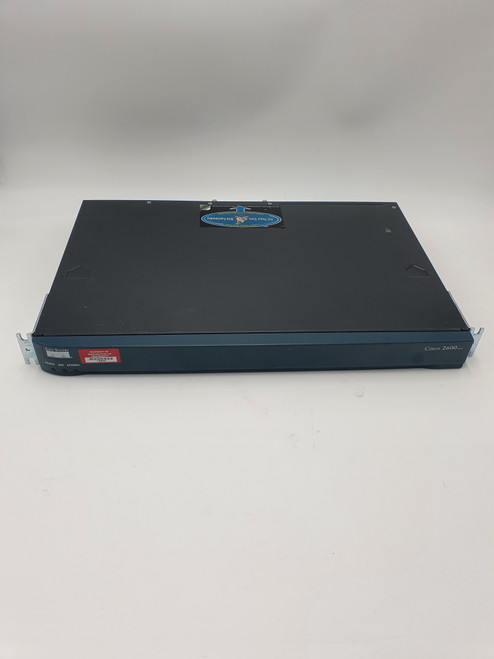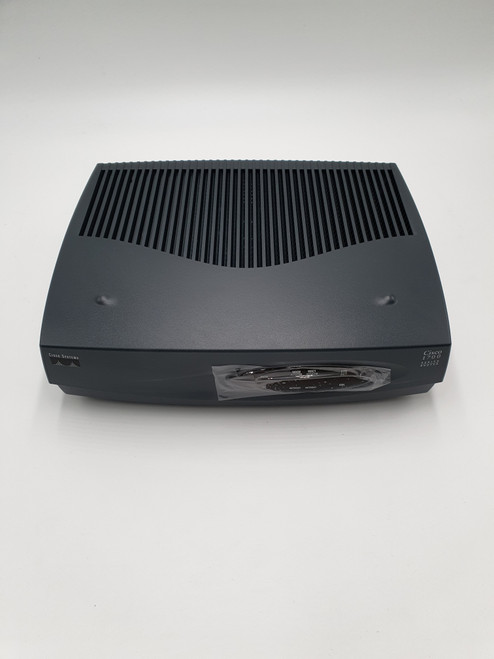

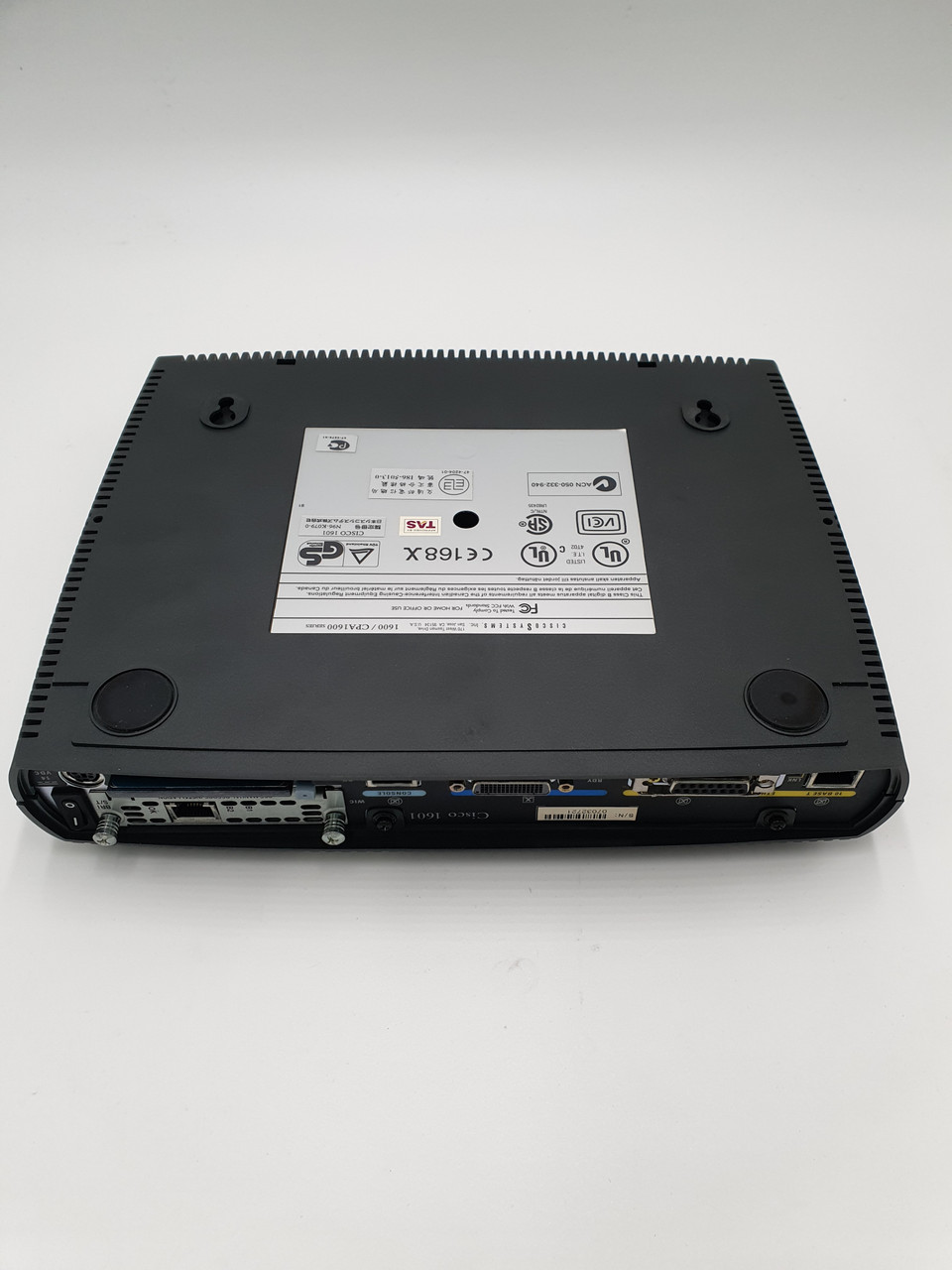

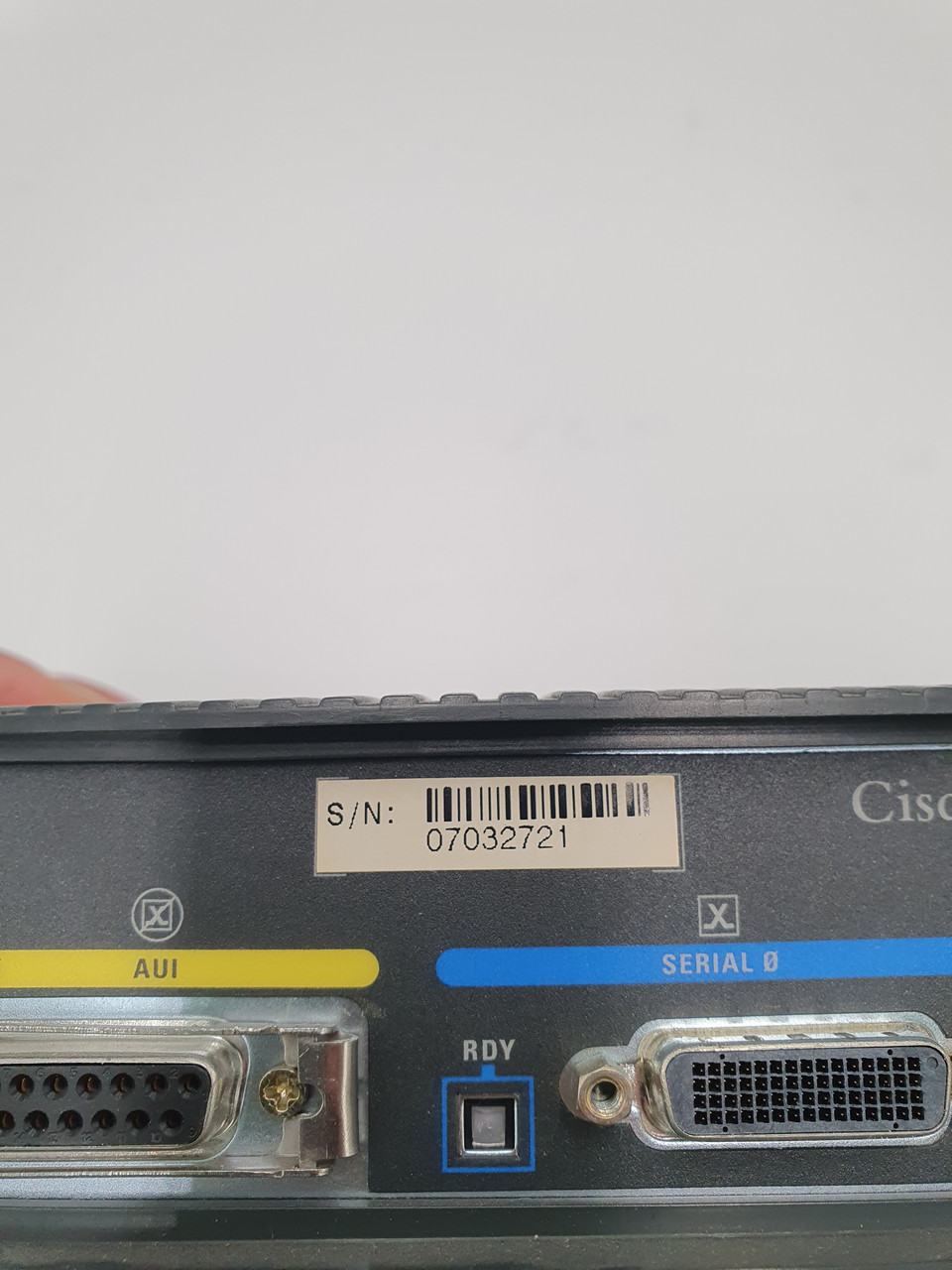
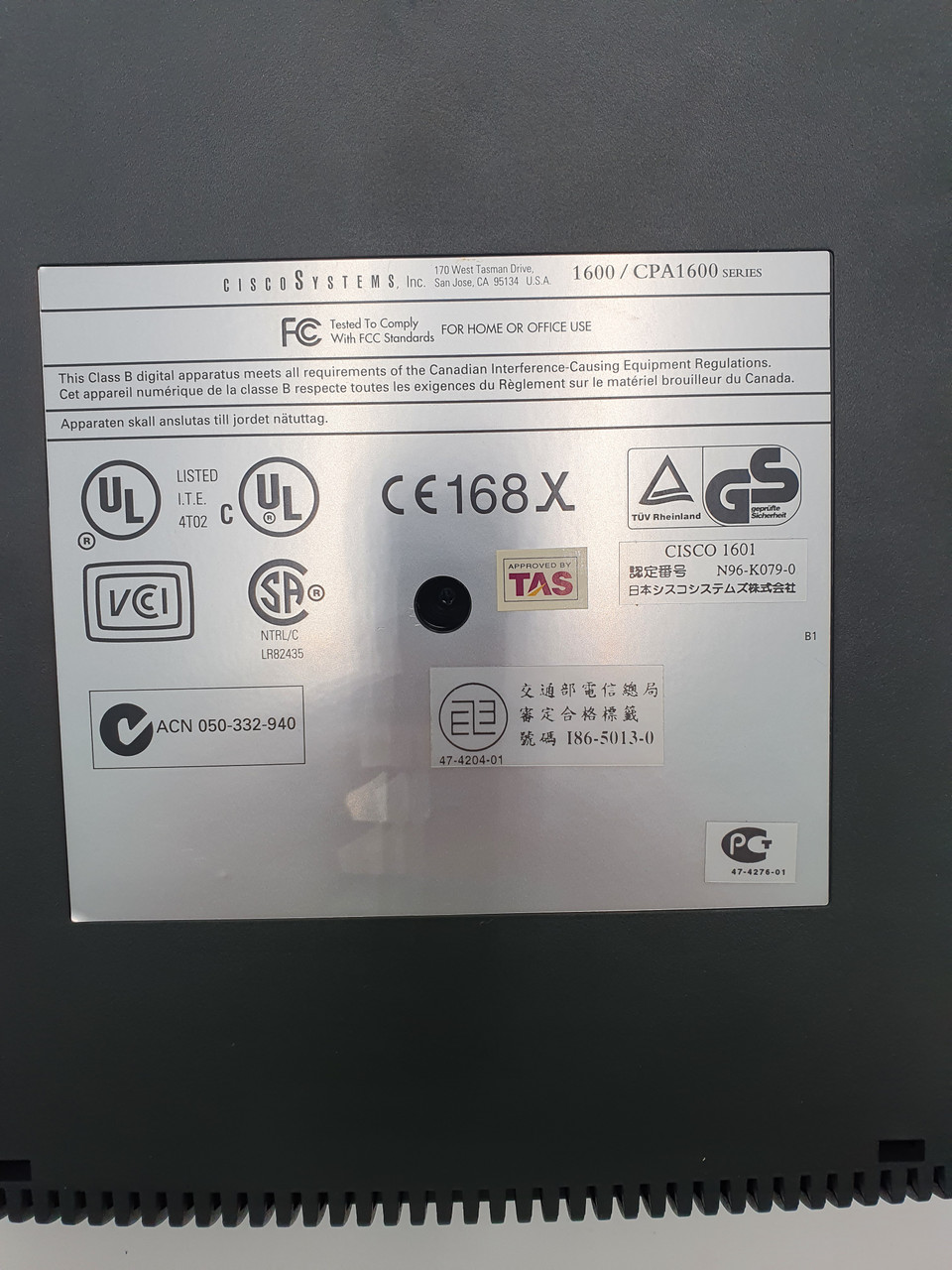
Cisco 1601 is part of the Cisco 1600 series modular access routers designed for small branch offices and remote site connectivity. It provides basic Ethernet LAN connectivity combined with WAN flexibility through a serial interface and a single WAN Interface Card (WIC) slot. The platform was widely used in early enterprise networks to connect small LANs to WAN services such as leased lines, ISDN, and Frame Relay using modular WAN expansion.
The router is now a legacy/end-of-life product but remains common in labs and legacy network environments.
Key Features
- 1 × 10Base-T Ethernet LAN port
- 1 × synchronous/asynchronous serial WAN port (built-in)
- 1 × WIC slot for WAN expansion modules
- Modular WAN support (ISDN, serial, CSU/DSU via WICs)
- Cisco IOS software-based routing
- Support for routing protocols such as RIP and static routing (platform dependent IOS)
- Basic security features (ACLs, early IOS security functions)
- Compact desktop chassis design
- Designed for small office WAN connectivity and branch networking
- Supports legacy WAN technologies (Frame Relay, ISDN via WIC)
Technical Specifications
Model: Cisco 1601
Series: Cisco 1600 Series Routers
Form Factor: Desktop router
Interfaces:
- 1 × 10Base-T Ethernet (LAN)
- 1 × Serial WAN port (DB-60 interface)
- 1 × WAN Interface Card (WIC) slot
WAN Expansion:
- Supports WIC modules (e.g., ISDN BRI, serial, CSU/DSU depending on card)
Processor:
- Motorola 68360 integrated processor (platform architecture)
Memory:
- DRAM (expandable depending on revision)
- Flash/ROM for Cisco IOS storage (platform dependent)
Supported WAN Types:
- Serial leased line
- Frame Relay
- ISDN (via WIC)
- X.25 (legacy support depending on IOS)
Management:
- Console port (RJ-45)
- Cisco IOS CLI
Power:
- External AC adapter (varies by revision)
Typical Throughput:
- Low-bandwidth branch office routing (sub-10 Mbps class, highly IOS dependent)